Friday, November 15, 2013

In Honduras and Canada, the strange political silence on inequality

Ten days left until the Honduran national elections, and I’m thinking about inequality.
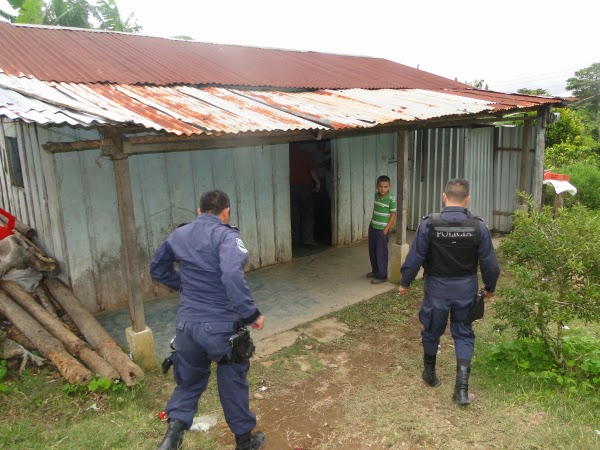
It’s stunning in Honduras. There are the obvious signs - the contrast between the lavish malls in the cities and the squatters’ shacks along any stretch of highway where there is a precarious place to cobble together some sticks and tarps and corrugated tin.
And there are the statistics.
The UN does a useful Human Development Report each year.
This year’s HDR report shows the top 20 per cent of the Honduran population have average incomes 29.7 times greater than the bottom 20 per cent. The only countries with more inequality, based on that measure, are Angola and Micronesia.  Even the failed states of Africa don’t reach that level.

Lavish malls...
In Canada, by contrast, the top 20 per cent have incomes 5.5 times as high as the bottom 20 per cent. Imagine how different the society would look if the richest Canada took the same share of incomes as their Honduran counterparts.
The HDR also uses another, broader measure of inequality. Based on that, Honduras still ranks as one of the most unequal countries in the world - only the Seychelles, Micronesia, Haiti and four African nations having greater inequality. (I hadn’t even heard of Comoros, one of the African countries.)
The myth is that inequality just happens, a result of hidden economic forces. Kind of like gravity, except only some people get held down.
But that’s not true, in Canada or Honduras. Governments make decisions that increase or reduce inequality. Reduce public health care, as I noted here, and you increase inequality. Cut taxes, and the result is the same. Raise the minimum wage, and you reduce inequality.
... and dismal shacks
In Honduras, for example, taxing an extra two per cent of the incomes of the highest-earning 20 per cent would fund a 60-per-cent increase in the incomes of the poorest one-fifth of the population. (Those people are really poor. About 74 per cent of Hondurans live in poverty, and 47 per cent in extreme poverty.)
Or the money could pay for a better education system or other measures which could reduce inequality in the long term. (Honduran schools are generally terrible.)
Instead, the government has been collecting less in taxes. I don’t now if that’s policy or corruption or incompetence or a combination of all those factors and more. Tax evasion is the norm; the director of the revenue department estimates it loses 43 per cent to tax scofflaws.
The government went through a huge exercise earlier this year that was supposed to eliminate some of the many tax exemptions. Nothing came of it. A 2010 study found 69 corporate tax breaks. Fast food franchises, mostly owned by a few of the elite, got a 10-year break on all taxes and a permanent exemption from paying import duties on the dubious claim they were good for tourism. (Come to Honduras, and eat a Big Mac.)
Social spending has also been cut, from 13.3 per cent of GDP in 2009 to 10.9 in 2012, according to a report on the Honduras post-coup economy by the Center for Economic and Policy Research.
The same report found that from 2010 to 2012, the top 10 per cent of Hondurans received more than 100 per cent of the benefits of economic growth. The average incomes of the other 90 per cent shrunk.
But, as in Canada, there is not much discussion of inequality.
Security, corruption, crime - they have been big issues in the election campaign.
Reducing poverty, of course, has been on the agenda, though not in an especially coherent way. 
The platform of Libre, a new party challenging the established Liberal-National party duopoly, includes measures that would address inequality. But even its campaign has talked much more constitutional reform than growing inequality.
The silence on such an important issue is as puzzling here as it is in Canada.


Wednesday, November 13, 2013

Six thoughts about the Rob Ford disaster

I’ve resisted adding to the flood of words about Rob Ford. But no more. Here are six thoughts.
First, this is sad. Ford, as a human being, is a mess and any compassionate person should feel empathy watching him struggle. Especially because he seems to have no one in his life to say ‘I care about you, and you have to stop this.’
Second, Ford’s hypocrisy is appalling. A month ago, a photo emerged of a Toronto employee with his head on his desk, apparently asleep. Ford wanted the employee and his manager fired if he was sleeping. Not suspended, or disciplined. Fired. 
But he uses illegal drugs and shows up at the workplace staggering drunk and violent, yet feels it is fine to keep his job. Ford supports tough-on-crime policies and harsh penalties for drug use - but not for himself. It is entitlement and ignorance gone mad.
Third, the jokes about Ford and the obsession with crack suggest a certain collective eagerness to forget that his problem is alcohol. Yes, crack is a reckless drug to use, and being in a drunken stupour is not a great defence. 
But the evidence suggests Ford’s problem is alcohol. 
Maybe we are in collective denial. In B.C., in the 12 months ending Sept. 30, we spent $986 per adult on alcohol, at the LDB price. That’s about 2.5 litres a week per adult of alcohol of all kinds. Many people aren’t drinking at all, of course, which means others are drinking much more.
Fourth, the political posturing was ugly. People in every walk of life struggle with substance abuse, addiction and self-destructive behaviour. It’s patently stupid to claim people of any political stripe have a monopoly on these problems. 
Fifth, this has not been, overall, a great time for the media. The Toronto Star has done fine and difficult work on the story. The Globe and Mail as well. 
But there has been so much rubbish written, from pieces arguing that this is what happens when you give people who live in suburbs the right to vote to columns suggesting the public doesn’t really need to know more about Rob Ford’s problems.
And sixth, this has been a worse time for political service and public life. Rob Ford is reckless, irresponsible and a liar. He has no sense of accountability, or honesty. Yet he is the mayor.
What are young people supposed to conclude from this ugly spectacle? They would be kicked out of their high schools in a flash for much smaller offences, but Ford is above such accountability, and still has his defenders. 
The rules only apply to people outside the club. 
Which is ironic, given that Rob Ford has always portrayed himself as one of those outsiders. Until he needed to claim the privileges of power.

Wednesday, November 06, 2013

The anti-regulation crowd should visit Ciudad de Angel

Governments of a certain stripe are always complaining about red tape, those darn regulations that stop people and businesses from getting on with things. 
Their supporters should come down to Honduras.
I pass Ciudad de Angel, a big new housing development, on my way out of Teguicgalpa. It looks pretty nice, although perched precariously on a hillside.
Too precariously, as it turns out. The new 200-home development is falling down around the devastated homeowners, who had hoped to stake their claim to middle-class status. (Prices ranged from $60,000 to $120,000, upmarket for these kind of developments around the edge of Tegus and San Pedro Sula. It was supposed to have a community pool and, of course, security.)
The construction was hopelessly substandard. The project was built on unstable hillsides. The developer dumped dirt and waste in several small ponds and then built on top of them.
Now the homes are falling down, literally. Four collapsed yesterday. Hundreds more are damaged, the roads are cracking along the fault lines. Owners complain of cracked walls, tile floors lifting, sewage flowing into their homes.
And the Honduran emergency commission wants people to abandon their homes because the entire development is unsafe and all the houses have severe damage.
Some residents have sued the Guatemalan developer, but the courts are hopeless. The worst in a bad region according to a report today.
Canadian homebuyers haven’t always been protected by regulation or the courts, of course. The leaky condo disaster plucked some $1.5 billion to $2 billion from people who thought they could safely buy a home, a huge loss. They had no legal remedies, because the developers shut down their companies and started anew.
But neither do Canadians face the risk of putting their life savings into a development that falls down around them.
It’s easy enough to trot out examples of unnecessary regulation.
But the notion that all rules and regulation developed by government are ‘red tape’ designed to ensnarl people who just want to get something done is destructive rubbish. As is the notion that buyers should somehow do their own geological surveys before they buy a home in what looks like a legit development.
Just ask the people in Ciudad de Angeles.

Footnote: Ian Reid has a look at another aspect of regulation here.

Saturday, October 26, 2013

Another grim year for Postmedia, and what lies ahead

It’s tough to pick the biggest problem for Postmedia, Canada’s largest newspaper company. And it’s just as hard to figure out where the corporation is going.
Postmedia released its quarterly and year-end results Thursday. They were grim, and  things are getting worse, not better. (The corporation's Powerpoint presentation on the results is here.)
Print advertising, about 60 per cent of total revenue, fell 13.4 per cent in the fiscal year ending Aug. 31. That’s worse than the 10.3-per-cent drop in 2012.
For national and retail advertising, about 60 per cent of total print ad revenue, the fourth quarter was the most grisly, meaning losses are continuing to grow.
Stripped of the buzzwords, Postmedia’s strategy appears to be to cut costs, try to find ways to get readers to pay more for products on various platforms and attempt to persuade advertisers to pay more for ads that work better.
The company launched a three-year “Transformation Program” in July 2012 that aimed to cut expenses by 15 to 20 per cent - $102 million to $135 million. It’s achieved $82 million in annualized savings so far, and is on track to reach the goal, management says.
The problem is that, in the last two years, revenue has already fallen by $147 million and Postmedia predicts more revenue losses in 2014. 
The cost-cutting targets sounded ambitious 15 months ago. But the corporation is not even halfway through the exercise and the targets are turning out to be much less than is needed to to offset revenue losses. 
That creates a worrying prospect of endless cuts as revenue losses continue, until there is nothing left. And, in the interim, of more falling revenues caused by cuts that hurt quality and service to readers and advertisers. 
The plans to find new revenue - getting readers to pay more and increasing digital revenues - haven’t worked. 
Since Postmedia took over Canwest’s newspaper assets in 2010, the corporation has been talking about ‘Digital First’ strategies. But three years on, it hasn’t come up with an effective approach. (In fairness, almost no newspaper companies have.)
In the last two years, traditional print advertising and circulation revenues have fallen by $151 million, or 19 per cent
Digital revenues, a priority for the company, have risen by $4.2 million, or 4.8 per cent. They are roughly keeping pace with inflation, despite starting from a small base and the corporation’s big emphasis on “Digital First.” (In a conference call for analysts on the quarterly report, Driving.ca was touted as an example of digital product development. It was launched this month after almost a year or work, the company said. There is some slick customer-targeting work going on behind the scenes, but the site doesn't look particularly innovative.)
The results of paywalls, intended to get money from people to read the newspapers’ websites, aren’t wildly encouraging.
It’s too early to judge, as paywalls were only introduced on a group-wide basis in May. Postmedia says it now has 120,000 people registered as website digital subscribers to its 10 dailies. But that includes print subscribers who registered for their free digital subscriptions, and the company didn’t reveal how many people are actually paying $10 a month to read the websites.
So what’s ahead? Cuts, of course, and well beyond the original “transformation” project launched last year. Real estate sales, which will give Postmedia some money to pay down its $489 million in debt.
And more of the same on the revenue side. 
There are changes offering some promise. The Vancouver Sun has named newsroom “champions” for tablets, mobile, web and print. The notion is apparently that they will work on deciding what content belongs on each platform, and the best way of sharing it. It might be late, and it falls short of La Presse’s $40-million bet on tablets, but it’s good thinking.
But on balance, things don’t look good. If the revenue and expense lines stay on the same track they have been on for the last two years, Postmedia could have trouble coming up with the cash to pay interest on its debt by 2015 or 2106. 
That’s not much time to fix things.
For now, the lenders who financed the papers’ purchase appear to be happy receiving interest and required payments on the principal. About 60 per cent of the debt carries 12.5 per cent interest rates and the rest is at 8.25 per cent.
That could change quickly if the bad news keeps getting worse and those interest payments look to be at risk.
Footnote: I wrote a four-part series of blog posts on newspapers' problems and solutions earlier this year. Find them at Part One, Part Two, Part Three and Part Four.

Friday, October 25, 2013

A Honduras aid program, a crushing crowd, a baby dead in her mother's arms

Santos Pineda: 'No one is to blame, it's what God wanted'
I had a blog post mostly done about the Bonos 10,000 progam, a Honduran government plan that is supposed to give $500 a year to the poorest families.
Then I read about Santos Pineda and his wife Aida Fajardo, and their four-day-old baby. The little girl died in a hugely overcrowded room where the family had waited in a disorganized crowd for two hours to get the Bono. She apparently suffocated in her mother’s arms in the crush of people.
The baby could have died anywhere, of course. She had spent three days in the hospital in an incubator after an early C-section delivery and just been released the day before, according to La Prensa. 
But the crush of people - 700 were crowded into a hall that is supposed to hold 200 - and the long wait to see if the family would be among the recipients would not be good for a sickly infant.
A Bono official said she had told Pineda not to bring his wife and the newborn, because the crowds would be dangerous. 
So why did Aida Fajardo and the baby - not named before she died - accompany him, while their three other children stayed in their neighbourhood? Who knows.
Maybe Aida Fajardo was more literate than her husband and needed to be there to read the forms. Maybe she didn’t want to be alone four days after giving birth.
Maybe they thought they would be more likely to make the Bono list with an infant in arms.
The internationally funded program is supposed to select recipients based on objective criteria - need, their commitment to have children attend school and health-care clinics, things like that. 
But there is only enough money to provide Bonos to half the poorest families. There are complaints of favoritism and political influence, with supporters of the governing National Party getting the Bonos while others are rejected. 
Elections are a month away, and candidates for the National Party were on hand  in La Casa de Cultura in Santa Barbara to help distribute the money. (The party, according to the polls, is in a close fight with the new leftish Libre Party.)
The crowds, the pushing, the struggle to find out if families are eligible have been repeated around the country, La Prensa reported.
That’s not surprising. The Bono provides 10,000 lempiras a year - about $500. It’s paid every four months, so the fortunate families were to get $166.
A labourer might get $5 or $6 a day in Honduras. About 40 per cent of the population have incomes under $1.50 a day. (People do grow their own corn and beans when they have access to land.) 
Police at family home
On average, the Bono represents a 20-per-cent increase in average income for the families. It can be the difference between hunger and enough to eat or a child who stays in school or gets needed medical care.
Fajardo checked her baby when they finally received the Bono, and found she wasn’t breathing. People cleared a path to the door, but the process of handing out the money continued.
"It's sad what happened to this girl,” Matias Pineda, one of the people waiting for a Bono, told La Prensa. “But you have to line up here because there is no work, no land to cultivate, the crime is brutal and you have to go to the politicians because they’re the ones who have the money.”
No one reported the baby’s death. The vice-mayor of Santa Barbara took them to buy a coffin and arranged a ride home. 
But police and prosecutors saw the news story and in today’s paper promised an investigation to see if anyone was negligent - the doctors who discharged the baby, the parents, the event organizers. Nothing will come of it.
Fajardo went back to the hospital to seek medical help. Pineda is looking after the other children, and chalks the whole thing up to God’s will. The Bono delivery program moves onto the next town, with a new set of politicians.
Just another Honduras story.

Wednesday, October 23, 2013

Lots of words in throne speech, but inequality not one of them

Throne speech wordcloud
Stephen Harper’s throne speech was an amazing 7,240 words long, a modern record and three times as long as the Conservative’s first throne speech.
But not once was inequality mentioned in all those words. That’s particularly striking in a speech that tried to touch on every possible theme that might appeal to a subgroup of voters.
Conservative strategists decided not to mention an issue that 75 per cent of Canadians identified as a problem in a poll last year.
To the Conservatives, growing inequality is not an issue for government.
But it is. 
There’s a myth that increasing inequality is some natural outcome of inevitable economic forces.
That’s false. Government policy changes increase or reduce inequality.
Taxes can redistribute income. Transfer payments  like disability assistance, unemployment or training benefits or pensions, can increase the income of those at the bottom of the pile.
A 2011 Conference Board of Canada report, for example, found that between 1976 and 1994 the tax and transfer system increasingly reduced income inequality.
But after 1994, the trend reversed and the polices increased the income gap. In 1990, for example, about 83 per cent of unemployed people were eligible for EI benefits; by 2009, that was chopped to 48 per cent. That promotes inequality.
Any policy decision has to balance many costs and benefits. But governments that don’t even mention inequality in an epic throne speech aren’t likely to give the issue any real attention.
They should. 
The OECD looked at inequality around the world, and concluded it’s a serious threat. The “social contract” that ensures people accept the state’s laws and responsibilities is at risk of unravelling, the OECD report said, as economic growth enriched a tiny sector of the population. The claims that the benefits would trickle down to others had proved false, the report found.
The Conference Board report cited a study by the Canadian Centre for Policy Alternatives tracking the incomes of the richest one per cent of Canadians using tax return data. 
That group - 246,000 people with an average income was $405,000 - claimed almost one-third of all income growth during the growth years from 1998 to 2007. One per cent of the population took 33 per cent of income gains.
Government policy played a significant role in ensuring that those people would take the greatest benefit from economic growth in Canada.
Most policies could at least be examined on the basis of whether they increased or reduced inequality.
Earlier this year, the Canadian Institute of Health Information released an analysis of the effect of public health care on inequality. 
Publicly funded health care reduces income equality by 16 per cent, CIHI found.  
People in the highest income group cost the system an average $206,000 over a lifetime. People in the lowest income group, $237,500. (Poverty is the single greatest predictor of poor health.)
And people in the lowest income group paid about $740 (or six per cent of income) in taxes that went to health care/ People in the highest income group paid $7,200 (or eight per cent  of income).
End or the public health care system, and the rich get richer and the poor get poorer (and sicker). 
So when people argue for reduced public health care, they should at least have to defend the increased inequality that would result.
There is an implicit deal that keeps people participating as responsible citizens.
They pay taxes and obey the rules and rely on the political process. They expect in return that government reflects their interests and values. They know there are no guarantees of success, but they expect the game is rigged so those at the top are always the big winners.
When governments don’t even acknowledge inequality, they threaten the social contract that makes the country work.

Monday, October 21, 2013

Government 'easing' us into letting U.S. agents work in Canada

Yahoo reports the Harper government is moving forward with plans to give U.S. FBI and DEA agents the right to operate in Canada.
The news service cites an article in Embassy Magazine (behind a paywall), that quotes a senior RCMP officer involved saying the government is moving in “baby steps” to prevent Canadians from being alarmed.
"We recognized early that this approach would raise concerns about sovereignty, of privacy, and civil liberties of Canadians," Chief Superintendent Joe Oliver told the Senate Committee on National Security and Defence on May 14. Oliver is the RCMP director general for border integrity,
"We said 'Let's take baby steps, let's start with two agencies to test the concept, let's demonstrate to Canadians and Americans that such an approach might work.’"
So the DEA and the FBI were the pilots, and the ‘baby steps’ include the Shiprider program that lets U.S. agents act as police in Canadian waters.
Broader U.S. action in Canada, including aerial surveillance, is being considered, the article says. (No word whether the access will be reciprocal - if Canadian police will be allowed to operate in the U.S.)
Which brought to mind this column from 2002. 
U.S. DEA agents had conducted an illegal operation in Canada, a B.C. Supreme Court ruling found. “The illegal conduct is extremely offensive because of the violation of Canadian sovereignty without explanation or apology," the justice wrote. 
Which establishes that the agents are already operating in Canada. And suggests that they won’t be much bothered to operate under Canadian law when as they are given a broader and broader role.
There are already a full range of agreements that let U.S. police forces operate in Canada in co-operation with Canadian authorities. There is no need to expand their role and, as the judgment shows, good reason to be wary. Even of ‘baby steps.’
The column, versions of which ran in the Vancouver Sun and papers around the province, is below. The lack of reaction or concern in the wake of the court’s finding was discouraging.

Aug. 26, 2002

Ottawa eerily silent on U.S. illegal operation in B.C. 

By Paul Willcocks 
VICTORIA - Maybe they just don't care up in Ottawa that U.S. agents feel free to enter Canada illegally, break our laws and then conceal the evidence from the courts here. 
For a week I've been trying to get someone - anyone - in the federal government to describe Canada's response to a B.C. court ruling that U.S. Drug Enforcement Agency operatives knowingly broke our laws. 
B.C Supreme Court Justice Janice Dillon found the Americans knowingly snuck into Canada, ran an illegal operation and then tried to conceal their activities from the court - a shocking abuse of Canadian law, she called it. "The illegal conduct is extremely offensive because of the violation of Canadian sovereignty without explanation or apology," she wrote. 
Talking to the federal government from B.C. is generally like shouting down a long, hollow tube to a deaf man. 
But Ottawa should have a response when a foreign government walks all over its police and laws, especially when that foreign government is seeking to have more and more of its agents operating in Canada. 
Dillon was ruling on a U.S. bid to extradite Brent 'Dave' Licht to California to face cocaine charges, the end of a saga that wanders a long, winding path from the DEA office in Los Angeles to a White Rock pier. 
The DEA plan originally targeted would-be Canadian cocaine importers. Two paid informants were told to pretend to be Colombian drug dealers in Los Angeles with lots of cocaine to sell. They found some interested buyers, and set off on a trail that led to Vancouver. They wanted to follow that trail across the border. 
The rules governing a DEA operation in Canada are clear. A U.S.-Canada agreement requires the DEA to get RCMP consent. They also needed a special permit from the immigration minister because the undercover agent had a criminal record. 
And they needed approval from the RCMP's top narcotics officer to pretend they had drugs for sale. The tactic is illegal in Canada except under tight controls, because of the risk of injustice. When police approach potential buyers, they may be creating a crime that would never have happened without their instigation 
The Mounties said yes and the phoney dealer and his DEA handler came up. But his efforts bombed; no big drug dealers were discovered. 
The DEA wanted to try again, but the RCMP said no. They had higher priorities. 
The DEA seemed to accept the decision. But a month later one of the undercover agents entered Canada illegally, and ignoring our law and agreements signed by his country, tried to make a drug deal. 
Eventually a pretend deal in California was arranged, with Licht. He wasn't there for the buy, so the U.S. set out to extradite him on conspiracy charges. 
That's what led to Dillon's ruling. The Americans knowingly broke Canadian law and violated international agreements, she found. They conducted an illegal reverse sting operation. They tried to conceal the information from the court. And they never offered any explanation for the illegal acts. (This wasn't some fluke. Documents showed that the RCMP felt pressured to approve the first operation quickly, because they feared that the DEA would just go ahead illegally.) 
I expected a run-around from American officials. But surely the Canadian government would have a response to the damaging findings. 
But it took two days for a spokesman for Justice Minister Martin Cauchon to say he had no comment, although he was considering an appeal - on behalf of the Americans. After more than a week of calls, Solicitor General Lawrence MacAulay's staff still haven't explained whether the case is an aberration, whether it will affect future DEA activities in Canada, how many legal DEA operations are conducted in B.C. - or even whether they've asked the Americans for an accounting for the illegal acts. 
Our law should matter more than that. 

Thursday, October 17, 2013

BC Lotteries by the grim numbers

• Number of active gamblers in BC - buying lottery tickets or gambling at least monthly - increased 350,000 since 2007 to 1.9 million. 

• BC Lottery Corp service plan goal for coming fiscal year - recruit more than 58,000 new regular gamblers. (Buying lottery tickers or going into a casino at least one a month.)

• Gambling losses per capita - all ages - in 2005, $384 a year. This year, $468. 

• Average gambling losses per BC adult this year $718; goal for next year $725. Part of BC Lotteries plan.

• Average loss by the 4.6 per cent of problem gamblers, $4,060 a year, according to this week's Provincial Health Officer's report.

• Minimum loss needed to make the 2008 top 100 BC Lotteries losers’ list - $270,000.
The stats above are almost all from the Crown corporation’s service plan. Each year, it sets out to recruit a certain number of new gamblers and to increase the amount each person loses.
That’s why Robert Luongo is part of the marketing plan. It’s why VLTs have been installed in “gaming centres” around the province.
It’s why ATMs, which were once banned from B.C. casinos so losers wouldn’t empty their bank accounts, were approved by the Liberal government. 
Just as it’s why the government lifted the ban on alcohol on casino floors. The more people drink, the more they lose.
Online gambling was introduced in 2004 with a $70 weekly loss limit to protect people from drunkenly or stupidly sitting in front of their computers losing all their money. The government nudged that up to $120, and then in 2009 raised the weekly loss limit to $10,000.
B.C. Lotteries is doing its job. Its mandate is to increase profits. That means recruiting new gamblers every year, and increasing the average amount each person loses, year after year. It means targeting the really big losers.
And the government has changed policies to help the corporation achieve those goals.
This, of course, under the party that pledged not to expand gambling in B.C.
"I want to build an economy based on winners, not losers, and gambling is always based on losers," Gordon Campbell said. "The only way government makes money on gambling is because you lose it." 
Then Kamloops MLA Kevin Krueger said gambling expansion was immoral. "The people it hurts the most are the ones we have a responsibility to protect, such as the poor, women and abused families." 
Of course, those two aren’t around.
But Christy Clark is. When the NDP started talking about a Vancouver casino and Clark was in opposition she was dead set against any gambling expansion.
"Does this government not realize that every dollar that they pull from the economy is another dollar that the consumer won't be spending here in British Columbia?" Clark asked. "This is money that won't be going to your local grocery store, clothing store or gas station."
Extensive research showed gambling expansion would be especially bad for women, she said.
"Those studies all there that tell us over and over again that expanding gambling has a deleterious effect on women's health, on their personal safety and on their economic stability," she said. "Based on those studies, we know that."
Gambling profits, or people’s losses, help the government cover expenses. 
But the costs, for some 160,000 people who are problem gamblers or at risk of problems, are high. As they are for communities, in health care and policing social problems.
Government isn’t going to get out of the gambling business. It wants the money from all those losing bets citizens place in mini-casinos, all those foolish scratch-and-lose lottery ticket purchases.
But it’s long past time that the permanent campaign to recruit more gamblers, and take more money from each one, was replaced with a responsible gambling policy. The recommendations in the Provincial Health Officer's report offer a good place to start.

Tuesday, October 08, 2013

Prescription heroin and a health minister who doesn’t believe in science

Or, when do politically driven policies cross a moral line 
Health Minister Rona Ambrose has changed Health Canada rules to shut down a Vancouver research project that would test the benefits and risks of prescribing heroin to hardcore addicts.
Research in Canada and around the world has shown that prescription heroin is an effective treatment option for a small group of addicts. 
That’s not surprising. Some people face enormous difficulty moving away from heroin addiction, and research has found methadone and other substitutes are ineffective for them.
So the choice is simple. Prescribe heroin and help people manage their drug use and deal with their addiction. 
Or leave them to buy drugs on the street.
All the research has shown that - again, for a small group - prescription heroin helps the addicted person and society.
Switzerland conducted landmark research in the 1990s. About 1,100 addicts received prescription heroin. 
There was a massive reduction in criminal activity by those in the study. Employment increased once people were freed from the daily struggle to find illegal drugs. More than 80 people quit using entirely. 
And there was not one overdose death.
The Swiss government approved a permanent prescription-heroin in program in 2008. Conservative elements forced a referendum, and the Swiss - hardly known for wild social experiments - voted 68 per cent in favour of the program.
Canada has done similar research. The NAOMI project was a thee-year trial in Montreal and Vancouver that tested the effects of prescribing both heroin and a heroin substitute for confirmed addicts. (Participants had to have been through treatment unsuccessfully twice; the mean age was 40.)
The program showed prescribing heroin or Dilaudid, the substitute used in the test, worked. Almost 90 per cent of participants had entered treatment or quit using illegal heroin after one year. (Only 54 per cent of those on a methadone program achieved the same results.)
And those on the program spent far less money on drugs of any kind. The monthly median spending fell from $1,500 - $50 a day - to $400.
That is great news for everyone who has their car broken into or a bicycle stolen. People who need more than $50 a day for drugs do crimes.  
Remove that need and you reduce crime. It’s cheaper and more effective than building more jails. That should be appealing for a government concerned with reducing crime.
The Netherlands approved prescription heroin in 2004, after a study showed positive results. Prescribed heroin to an addict resulted in savings of $17,000 a year compared with methadone programs.
Any discussion of drug policy seems to skid quickly into extremes. Prescription-heroin programs are no panacea. A small percentage of users would qualify, people with deep addictions who have tried rehab and methadone but continue to buy and use heroin. Perhaps 10 per cent or less of all users.
For those people, and the community, the program would have benefits, and no negative aspects.
Ambrose says she killed the option because heroin is bad and doctors shouldn’t prescribe “dangerous drugs like heroin, cocaine, ecstasy and LSD.”
Everyone would agree a heroin addiction is bad. But most rational people would agree that managing the addictions of people who can’t quit makes sense.
And Ambrose’s reference to “dangerous drugs” is baffling. Alcohol is freely available, and is responsible for five times more hospitalizations in B.C. than all illegal drugs combined. Almost all drugs are dangerous, including prescription drugs, which kill hundreds - or thousands - of Canadians a year.
I avoid writing about motives. But why would Ambrose ignore all the evidence and opt for a destructive edict that would hurt people and communities, with no public benefit?
The Conservatives might have answered the question. 
The Conservative party sent out a fundraising letter that echoed Ambrose’s talking points. They were “shocked” to learn Health Canada had approved the heroin trials. “If the NDP or Liberals are elected in 2015, you can bet they would make this heroin for addicts program permanent,” the appeal says. “We can’t let that happen.”
Even though the program reduces the damage done by addiction, makes streets safer and helps individuals and families.
Parties say stupid or dishonest things to raise money and rally support.
But when a health minister and government put politics ahead of both evidence-based policy and human decency, a line has been crossed.
Footnote One: Ambrose’s speechwriters invoked the death of Glee star Cory Monteith in her announcement. Monteith died from a combination of alcohol and heroin use, according to the B.C. Coroner’s Service. Heroin-prescription programs have controls to prevent people who are intoxicated from receiving the drugs.
Footnote Two: B.C. Health Minister Terry Lake said Ambrose was wrong to change the rules and shut down the trial. The idea of prescription heroin isn’t new in the province. In 1994, then chief coroner Vince Cain reviewed the heroin problem. He recommended more treatment facilities, sustained help for recovering addicts and a shift to treating addiction as a health issue, not a criminal one. And he recommended prescribing heroin to people who can’t quit.
Dr. John Millar, then B.C.'s chief medical officer, completed another report on injection drug use in B.C. in 1998. “Heroin in itself is not particularly devastating,'” he found. What does more harm is the struggle to get enough money to buy it, the varying purity and dangerous additives and the sharing of needles.
Millar called for a provincial substance abuse commission to replace the fractured efforts spread across several ministries, an immediate 50-per-cent increase in detox spaces and free methadone. And he too proposed a test of providing legal heroin for those who qualify.

Sunday, September 29, 2013

Postmedia stock trade shows company has lost 87 per cent of value

So what’s Postmedia worth?
A rare big stock trade last week offered a useful indication, and it’s not pretty.
When the company stock started trading in June 2011, the price was around $13 a share. Multiply that by the number of shares - about 40 million - and you have a value of $524 million. 
The trade last week was at $1.65, suggesting a value of $67 million. Which means the company’s value has fallen by 85 per cent in a little more than two years.
The trade mattered because it was large. The stock is mostly held by the big lenders who financed the acquisition of the newspaper company and Postmedia daily trades are too small to give any real indication of value.
But last Thursday, about seven million Class B shares traded hands in a single transaction, almost 20 per cent of the total outstanding.
It’s unclear who was selling or buying. The Class B shares are reserved for foreign owners as part of Postmedia’s strategy to qualify as a Canadian company. That’s critical; businesses can claim the cost of advertising in Canadian-owned newspapers and magazines as a tax deduction.
The sale, one month before the company releases its next quarterly results, at least raises questions about whether one of the original lenders that financed the deal has decided to abandon ship.
 For earlier posts on newspapers' woes, go here.
Footnote: Class B shares, foreign-owned, represent about 97 per cent of the stock, but are limited to 49.9 per cent of the votes in any matters to be decided by shareholders. It’s not credible to claim the company is really Canadian-controlled when Canadians or Canadian institutions own three per cent of the stock, and foreign lenders hold the debt, but the structure meets legal requirements.

Wednesday, September 25, 2013

Housing allowances show MLAs' rich sense of entitlement


This Times Colonist story on MLAs' housing allowances should make you angry.
Especially the arrogance.
Rob Shaw reports that MLAs are on track to claim $1.1 million in accommodation costs this year - $14,100 each - even though the legislature will sit just 36 days.
That’s simply wrong.
But what’s infuriating and shameful is the sense of entitlement, embodied by Liberal caucus chair Michelle Stilwell.
She told Shaw MLAs still end up spending some of their own money because the $1,000-a-month taxpayer allowance isn’t enough. (MLAs can claim $1,000 a month without providing any receipts, or $1,580 if they provide evidence they use the money for housing. Most choose not to provide receipts, which raises other questions about whether housing allowances are actually paying for accommodation.)
“You’d be hard-pressed to find somebody who isn’t spending over and above that,” said Stilwell. “Most of them are paying out of pocket.”
So why do Stilwell and her government think a disabled British Columbian should be able to find accommodation for $375 a month? Or that a family on income assistance - a parent with two children - should get no more than $660 a month?
There is a sentiment that life on income assistance should be horrible so people are desperate to get any kind of job - the ‘make-them-suffer’ school.
But many people on disability assistance aren’t likely to make a quick transfer to paid employment. Neither are many of the people on income assistance these days, as they have serious problems that make them unlikely to be hired. (Persistent multiple barriers to employment, to use the government’s term.)
There are about 94,000 people in those two groups.
And there are about 35,000 children living in households on assistance, who the government has decided should grow up in poverty and substandard housing. The research is clear that childhood poverty greatly increases the risk of a lifetime of problems and costs for the individual and society, from illness to unemployment.
Stilwell says it’s impossible for MLAs to find a second apartment for $1,000 a month. 
But she also says people income assistance should be able to house themselves, and their children, for a fraction of that amount.
It’s a glaring example of a sense of entitlement, and MLAs belief that they deserve much better treatment - taxpayer-paid - than the citizens they represent.
MLAs gave themselves much richer allowances in 2007, when they also raised their pay and created a pension plan most citizens could only dream about. 
Under the previous system, they could only claim housing costs when they were in Victoria. (Capital Region MLAs are ineligible.) The result is that most will receive at least twice as much this year as they would have under the old system.
Another result is that about 25 per cent of MLAs from outside the capital region now own second residences here, which look much liked taxpayer-subsidized investments.
The system needs reform. MLAs deserve to be compensated for living expenses when they are required in the capital, but they should be reasonable, justifiable and transparent.
Much more urgently, MLAs need to explain why they think people on income  or disability assistance should be able to find housing in Victoria for $375, when MLAs can’t do it on $1,000.

Footnote: Average pay for a B.C. MLA is now $118,000, putting them in the top four per cent of tax filers in the province. This old post explains how they got there. It's not pretty.

Wednesday, September 11, 2013

9/11: A licence to extend the state's power

This is the my Vancouver Sun column on the first anniversary of the attack on the World Trade Centre. More than decade later, I think it stands up well.

There's something at once wrong and frightening about the fervent celebration of the attacks on the United States one year ago.Wrong, because it rests on the false pretence that Sept. 11 was a defining moment that changed everything, for everyone.
And frightening because it is being used to justify mindless conformity, an erosion of individual rights in favour of the state -- and even war.
It was a terrible day. But most people have placed that devastating event into some appropriate place among the other terrible and joyous moments that define a life. About 40,000 children were born in B.C. last year. For those families, 2001 won't be the year the World Trade Center was destroyed; that pales beside the wonder of a new life beginning. About 315 British Columbians killed themselves last year. For those families, it will be the year that someone was lost, and something in them died, too.
The attacks were terrible. But they were not different in purpose or effect than the decades of horrors that the current generation has witnessed.
Even their scale is not beyond comparison. Some 3,000 people died last Sept. 11. Twenty times as many died when the second bomb fell on Nagasaki; twice as many died in Bhopal after the 1994 Union Carbide disaster; about the same number of Africans will die of AIDS while you are at work today.
Last Sept. 11 was an awful day, but everything didn't change because of it. We still go to work, look for happiness, slide into despair. We raise our children. Just like always. And one year later, I am much less frightened of a terror attack than I am of the governments supposedly on my side.
The state -- Canada or Afghanistan, America or Iraq -- always wants to increase its power over the people. It's not sinister; if you are in charge of keeping order, then you will want to make that task easier -- surveillance cameras on every corner, fewer legal right for citizens. But it's an imperative that means citizens must always be prepared to push back.
For a year governments have been using Sept. 11 as a licence to extend the state's power. And an uncertain public has failed to push back.
Airport security may have needed upgrading, perhaps through improved training. But a $24-per-ticket surcharge is taking $400 million a year from travellers' pockets and has wounded regional airlines and the communities they serve. The take from Vancouver alone is enough to hire more than 600 extra security staff; the need has never been demonstrated.
The federal government likewise made no effective case for $8 billion in increased security spending over the next five years, money it could never find to help Canada's poorest children or reduce the tax burden.
And now the U.S. is pressuring Canada to spend more on defence, even after a 10-per-cent increase this year. (The Americans spend $400 billion a year on their military, more than the next 25 countries combined. To match their level of per-capita spending, Canada would have to more than triple its defence budget.)
Sadly, it's not just about money. The Bush administration quickly passed the "USA Patriot Act" (the name, commanding mindless acquiescence, should sound alarm bells.) Americans lost rights they had treasured for 200 years. The right to legal representation, to a speedy and public trial, to protection fromunjustified searches -- all gone. Americans can now be jailed indefinitely and secretly, without a trial.
Canada didn't go as far. But the prime minister can now outlaw groups based on secret evidence. Police gained the right to arrest someone who has broken no law on the suspicion that person is involved in terrorist activities. You can now be jailed for refusing to answer police questions.
And then there is war. Canada fought in Afghanistan, to little obvious effect. And now we are being asked to fight in Iraq, not because of anything that nation has done, but because the U.S. believes Saddam Hussein may some day do something. This is not a war on terrorism; it's a beating for a nation the U.S. simply wishes had a different leader.
Enough. Everything did not change in a few terrible hours one year ago. We have rights and freedoms and values worth defending, and a commitment to the rule of law that should not be abandoned when a government finds it convenient.
We will betray our past and our future if we allow ourselves to be defined by a single day of terror.

Tuesday, September 10, 2013

Poll shows Hondurans really, really unhappy with country's direction

Hondurans are ferociously gloomy about the state of their country, according to a new poll this month. 
The poll, by CESPAD, a citizen’s pro-democracy organization, looked at voter preferences. The national elections are now a little more than two months away.
It also asked about attitudes toward government, the state of the country and democracy.
The results were grim. Only 3.2 per cent of Hondurans think the country is progressing.  Only 18 per cent think their families’ economic situation is even a little better this year than last.
The poll asked whether the current government was helping to resolve problems, making no difference or actually make things worse in the country.
The last option won - 47 per cent think the government is making things worse. Only 9.3 per cent believe the current National Party government is helping to deal with the problems.
Those are really bad numbers. It’s hard to imagine people putting up with such an unhappy situation indefinitely.
Which makes a couple of the other questions in the poll. CESPAD asked if people were satisfied with the way democracy was working. Almost 78 per cent said no; only 22 per cent were satisfied with Honduran-style democracy. (The 2009 coup is likely a factor, along with corruption.)
Three out of four favoured a national assembly to write a new constitution.
The poll also asked what kind of change is needed - how radical or sweeping.
And 73 per cent said radical changes in all areas are needed. Thirteen per cent though gradual change in all areas is needed and 12 per cent thought change was only needed in the most problematic areas.
It’s very tough to interpret those last responses.
Almost three out of four Hondurans believe radical change is needed in all areas.
But it’s not all clear what they mean by radical change. 
Radical change could be a return to a state run by the military, or socialism. It could be raising taxes and cutting spending, or it could be higher minimum wages and land re-distribution.
Or, nothing could happen.
I’ve steered clear of writing about Honduran politics. What do I know.
But the Nov. 24 elections are going to be fascinating. Voters elect the president, regional representatives to congress and municipal officials on the same day.
The CESPAD poll puts Libre and its presidential candidate Xiomara Castro de Zelaya slightly ahead, with about 28 per cent of the vote. (She is the wife of Manuel Zelaya, who was ousted in the coup.) Libre is generally seen as to the left.
That’s a huge change. Honduras has had a two-party system since democracy was restored in 1981. (Zelaya was elected as a Liberal.) it’s hard to know what the end of that traditional political structure will bring.
The National Party and presidential candidate Juan Orlando Hernández are a close second.
Hondurans might be divided on their choice for the next government.
But they are sure in agreement that the country is stalled, and big change is needed.